
STOP WAITING for the New Normal
Why Adaptability Is Becoming Every Business's Greatest Strength
For years, businesses have been waiting for conditions to settle. Lower inflation. Greater certainty. A stronger economy. Stable interest rates. But according to economist Brad Olsen, the biggest shift leaders need to make is accepting that uncertainty is no longer a temporary phase. It has become part of doing business, and the organisations that thrive will be those that learn to adapt rather than wait.
For much of the past decade, business leaders have been asking the same question:
- When will things get back to normal?
It is an understandable question. Every year has seemed to bring another major disruption. A global pandemic. Labour shortages. Record inflation. Rising interest rates. Supply chain issues. Geopolitical tensions. Natural disasters. Most recently, renewed conflict in the Middle East and the largest oil price shock in decades have once again reminded businesses that global events can rapidly reshape local conditions.
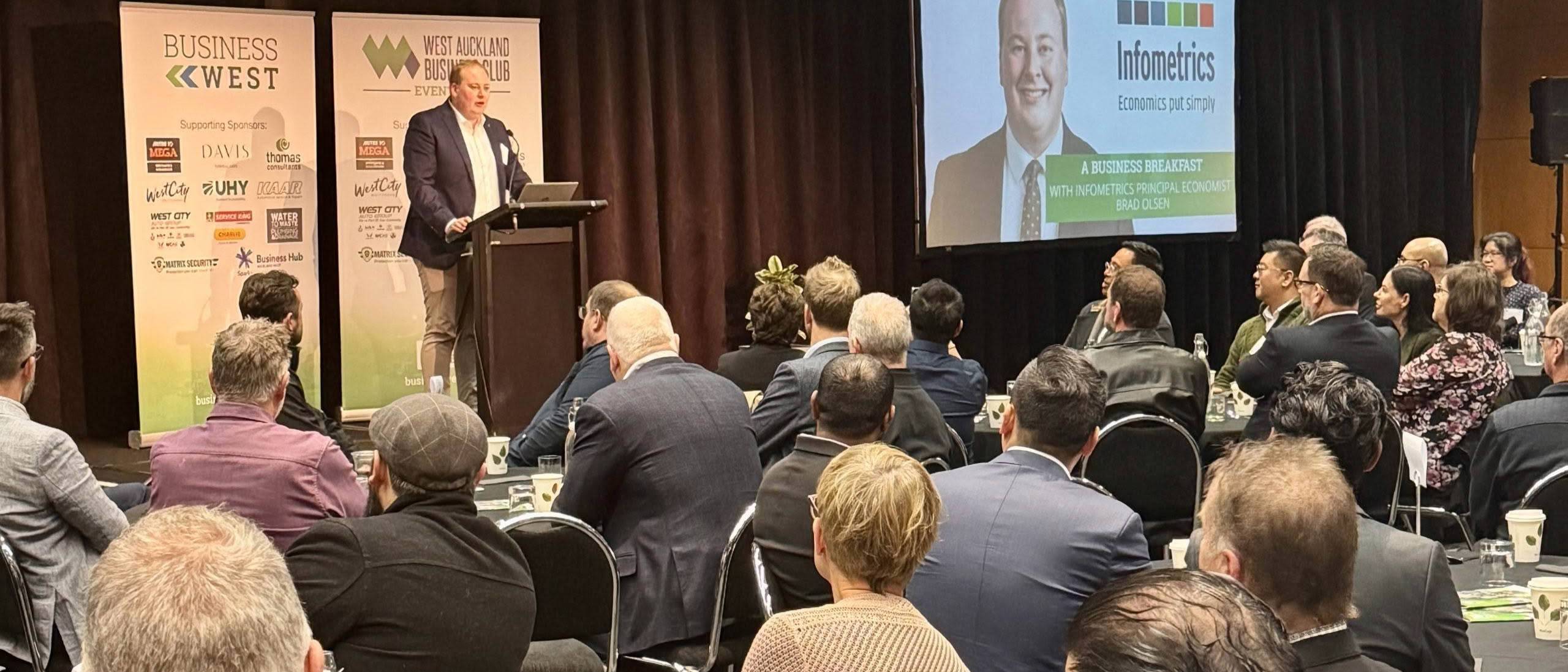
Speaking at a recent Business West breakfast, economist Brad Olsen challenged the idea that a return to “normal” is just around the corner. Instead, he suggested that uncertainty itself has become the new operating environment for business.
Looking Back Won’t Help You Plan Ahead
One of Brad’s strongest observations was that there is no recent period businesses can realistically use as a benchmark.
Looking back to 2019 no longer provides a useful comparison because the way organisations operate has fundamentally changed. The pandemic years were anything but ordinary, while the years that followed brought unprecedented inflation, severe workforce shortages, and rapidly rising interest rates. Even today, businesses continue to navigate international conflict, volatile energy markets, and changing trade relationships.
Rather than searching for the perfect reference point, Brad encouraged leaders to accept that today’s business environment requires a different mindset altogether.
The goal is no longer returning to what was. It is preparing for what comes next.
Resilience Is No Longer Optional
If there was one word that captured Brad’s presentation, it was resilience.
For many years, resilience was often discussed as a desirable quality. Today, it has become a commercial necessity.
Businesses are increasingly operating in an environment where significant disruption can emerge with very little warning. Whether it is extreme weather, changing government policy, global conflict, supply chain interruptions, or sudden shifts in customer confidence, organisations need systems that allow them to respond quickly rather than react emotionally.
Brad suggested that business owners should now expect disruption rather than be surprised by it.
That shift in thinking changes how leaders make decisions. Instead of building businesses for perfect conditions, they begin building businesses that can perform under changing conditions.
Planning for Flexibility Instead of Certainty
One of the biggest challenges for business owners is that uncertainty often encourages hesitation. Investment decisions get delayed. Recruitment slows. Growth plans are postponed while leaders wait for more confidence in the market.
Brad’s message was that waiting indefinitely is becoming an increasingly risky strategy.
No one can predict exactly what the next twelve months will bring, but organisations can improve how prepared they are. Strong cash flow management, diversified revenue streams, investment in capable people, and flexible operational systems all help businesses respond more effectively when conditions change.
Adaptability is no longer simply about surviving difficult periods. It is becoming a genuine competitive advantage.
Leadership in a Constantly Changing World
Perhaps the greatest challenge facing leaders today is helping their teams remain confident while the external environment continues to evolve.
People naturally seek certainty, yet business leaders increasingly need to make important decisions without having perfect information. That requires clear communication, thoughtful planning, and the confidence to adjust course as circumstances change.
Rather than promising certainty, today’s leaders can create confidence through preparation.
As Brad Olsen reminded the audience, businesses may need to become comfortable with the reality that each year will bring new challenges. Those challenges may look different from the last, but they are unlikely to disappear altogether.
For West Auckland businesses, that message is both realistic and encouraging. The future may remain unpredictable, but organisations that invest in resilience, build adaptable teams, and stay focused on long-term capability will be far better placed to navigate whatever comes next.
The businesses that succeed over the next decade may not be those waiting for the new normal.
They will be the ones who learn to thrive without it.